When it comes to protecting your home, the roof does more than just keep out the rain — it defines your home’s look, energy efficiency, and overall durability. While metal roofs are known for their long life and incredible strength, even the toughest ones eventually need replacement.
If you’re wondering whether it’s time to replace your old metal roof or how the process works, this guide will walk you through every step — in simple, easy-to-understand terms.
Why Homeowners Choose Metal Roofs
Metal roofing has become one of the most popular choices for both residential and commercial buildings — and for good reason.
Unlike traditional shingles or tiles, metal roofs can last anywhere from 40 to 70 years with minimal maintenance. They reflect sunlight, resist harsh weather, and give your home a sleek, modern appeal. Plus, they’re environmentally friendly since most metal roofing materials are made from recycled metals and can be recycled again after use.
But no matter how strong your roof is, time and nature always win in the end. That’s when metal roof replacement becomes necessary.
Signs It’s Time to Replace Your Metal Roof
Before jumping into replacement, it’s important to identify whether your roof truly needs it. Here are a few signs to watch out for:
1. Rust and Corrosion
If you start seeing large rust spots or corrosion around seams, fasteners, or edges, it may mean the protective coating has worn away — a key sign it’s time for replacement.
2. Leaks and Water Damage
Persistent leaks, water stains on ceilings, or damp insulation can indicate your roof’s seal is compromised. In metal roofs, leaks can worsen quickly if not fixed.
3. Loose or Missing Panels
Storms, strong winds, and age can cause panels to loosen or even go missing. If repairs become frequent, replacing the roof might be more cost-effective in the long run.
4. Worn Paint or Finish
The finish on a metal roof protects it from rust and UV rays. When that finish fades, peels, or bubbles, the roof becomes more vulnerable to damage.
5. Structural Damage
If the decking or framework beneath the roof has been compromised due to moisture or age, replacing the entire roof system is often the safest choice.
The Metal Roof Replacement Process
Replacing a metal roof might sound complicated, but with a skilled contractor, it’s a smooth and efficient process. Here’s a simple breakdown of what happens:
Step 1: Inspection and Planning
A professional roofer starts by inspecting your current roof to assess its condition. They’ll check for corrosion, leaks, loose seams, and damage underneath the panels.
After the inspection, they’ll recommend the best type of metal and estimate the cost. This planning stage ensures everything goes smoothly once the work begins.
Step 2: Removing the Old Roof
Depending on your roof’s condition, contractors may remove all existing panels and underlayment. In some cases, if the old roof is structurally sound, a new metal layer can be installed over it — a process known as re-roofing.
Step 3: Preparing the Surface
Before installing the new roof, the surface is cleaned and inspected. Any damaged insulation or decking is replaced to ensure a solid foundation.
Step 4: Installing the New Panels
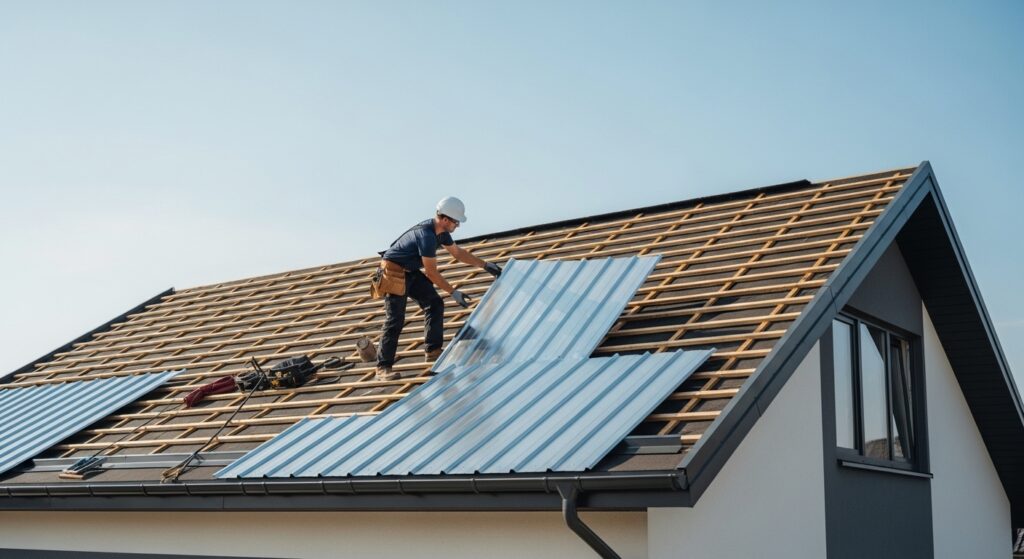
The new metal panels are then installed, usually starting from the bottom edge of the roof and working upward. Modern roofing systems often use concealed fasteners for a sleek look and better protection against leaks.
Step 5: Sealing and Finishing Touches
After installation, all seams and joints are sealed to make the roof completely watertight. Flashing, trims, and gutters are checked and adjusted as needed for proper drainage.
Choosing the Right Metal for Replacement
Metal roofs come in a variety of materials, each with its own strengths and style. Here are the most common types you can choose from:
1. Steel Roofs
Steel is durable, affordable, and available in multiple finishes. Galvanized and Galvalume coatings help protect it from rust and corrosion.
2. Aluminum Roofs
Lightweight and resistant to salt corrosion, aluminum is an excellent choice for homes near coastal areas.
3. Copper Roofs
Copper offers unmatched beauty and longevity. Over time, it develops a stunning patina — but it’s also one of the most expensive options.
4. Zinc Roofs
Zinc is self-healing, meaning small scratches can disappear over time. It’s eco-friendly and has an exceptionally long lifespan.
Benefits of Replacing Your Metal Roof
If you’re hesitant about the cost or effort of roof replacement, here are a few reasons why it’s worth it:
Improved Energy Efficiency
Modern metal roofs reflect more sunlight and retain less heat. This can help lower your cooling costs during hot months.
Enhanced Curb Appeal
A new roof instantly refreshes your home’s look. With updated colors and styles, you can transform an outdated house into something modern and elegant.
Better Weather Protection
Today’s roofing systems are built to handle extreme conditions — from heavy rains to high winds — giving you peace of mind year-round.
Higher Home Value
A brand-new metal roof can significantly increase your property’s resale value. Buyers appreciate the low maintenance and long lifespan.
Long-Term Savings
Although the initial cost of replacement might seem high, metal roofs often last decades, saving you from frequent repair and maintenance expenses.
How Much Does Metal Roof Replacement Cost?
The cost of replacing a metal roof depends on several factors — including roof size, material type, labor, and location.
On average, homeowners can expect to pay between $8 and $16 per square foot for a full replacement. Premium materials like copper or zinc can cost more, while steel and aluminum tend to be more budget-friendly.
Keep in mind that investing in quality installation and materials ensures your new roof lasts longer and performs better — saving you money over time.
Maintenance Tips After Replacement
Once your new metal roof is installed, a little care goes a long way in keeping it in top shape:
- Inspect annually for loose screws, minor rust, or debris buildup.
- Clean gutters regularly to prevent water backup.
- Avoid walking on the roof unless necessary — it can cause dents or scratches.
- Touch up paint or coating if you notice small chips.
These small steps can easily extend the lifespan of your new roof by several years.
Final Thoughts
Metal roof replacement isn’t just about fixing an old structure — it’s an investment in your home’s strength, style, and value. With the right material, professional installation, and simple maintenance, your new roof can protect your home beautifully for decades to come.
Whether you’re upgrading for energy efficiency, curb appeal, or simply peace of mind, a new metal roof is a smart, lasting choice that pays off in more ways than one.
FAQs
1. How often should a metal roof be replaced?
Most metal roofs last between 40 and 70 years, depending on the material and maintenance. Replacement is only needed when corrosion, leaks, or structural damage appear.
2. Can you install a new metal roof over an old one?
Yes, in some cases. If the old roof is still structurally sound, a new metal layer can be installed on top, saving time and labor costs.
3. What’s the best season for metal roof replacement?
Spring and fall are ideal since weather conditions are mild, allowing contractors to work efficiently without extreme heat or rain delays.