
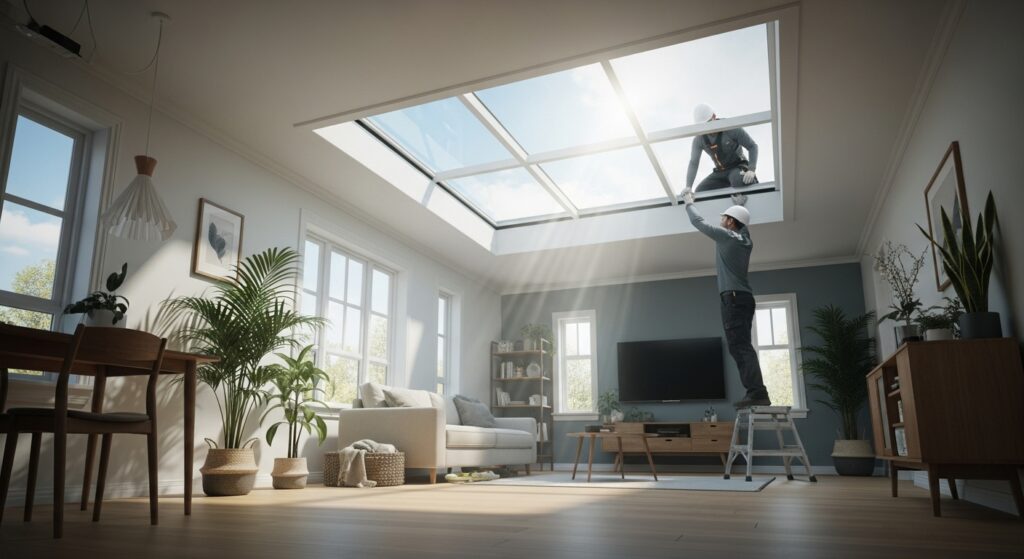
There’s something magical about natural light. It transforms a room — making it feel warmer, bigger, and more inviting. Skylights are one of the best ways to achieve that effect. Whether you want to brighten a dark hallway, add a dramatic touch to your living room, or make your attic more livable, a skylight can do wonders.
In this guide, we’ll walk you through everything you need to know about skylight installation — the benefits, the preparation, the process, and some smart tips to ensure your investment lasts for years.
Why Install a Skylight?
Before diving into the how-to part, let’s talk about why homeowners are turning to skylights more than ever.
1. Natural Light and Energy Savings
Skylights flood your interiors with sunlight, reducing your need for artificial lighting during the day. This not only cuts down electricity costs but also enhances your mood and productivity.
2. Better Ventilation
Certain skylight types, like vented or operable models, can be opened to allow fresh air in and let stale air out. This helps maintain better indoor air quality, especially in kitchens, bathrooms, or attics.
3. Enhanced Aesthetics
A well-placed skylight can become the centerpiece of a room. It brings in light patterns that shift throughout the day, creating a dynamic and cozy atmosphere.
4. Increased Property Value
Homebuyers love natural light and energy-efficient features. Installing skylights can increase your property’s appeal and resale value.
Choosing the Right Skylight
Skylights come in different shapes, sizes, and materials — and picking the right one matters. Here are some important factors to consider.
Fixed vs. Vented Skylights
- Fixed skylights are sealed shut. They’re ideal for rooms that only need light, not airflow.
- Vented skylights can be opened manually or with a remote. They’re great for ventilation and controlling humidity.
Glazing Options
- Tempered glass is durable and safe, often used in most residential skylights.
- Laminated glass adds an extra safety layer — even if it cracks, it won’t shatter.
- Acrylic or polycarbonate domes are lighter and cheaper, though they may scratch or discolor over time.
UV Protection and Energy Efficiency
Look for skylights with low-E coatings or double-glazed glass to prevent heat loss in winter and block harmful UV rays in summer. This helps maintain comfortable indoor temperatures year-round.
Preparing for Skylight Installation
Proper planning ensures your skylight not only looks good but also performs well.
Assess Your Roof Type
The type of roof you have determines the installation method.
- Asphalt shingle roofs are the easiest to work with.
- Metal and tile roofs require more precise flashing and sealing.
- Flat roofs may need a curb-mounted skylight to prevent leaks.
Find the Perfect Spot
The best location depends on the purpose. For example:
- Bedrooms: East-facing skylights welcome the morning sun.
- Living rooms: South-facing skylights bring consistent light all day.
- Bathrooms: North-facing skylights provide soft, glare-free light.
Make sure no large trees or tall buildings block the sunlight.
Gather the Right Tools and Materials
You’ll need:
- Measuring tape
- Circular saw
- Roofing nails
- Flashing kit (usually comes with the skylight)
- Caulking and sealant
- Safety gear (gloves, goggles, harness if needed)
Step-by-Step Skylight Installation
Here’s a simplified overview of the skylight installation process. While many homeowners choose professional installation, knowing the steps helps you understand what’s involved.
Step 1: Mark the Opening
From inside the house, mark the exact position where you want the skylight. Drill a pilot hole through the ceiling and roof to guide you from outside.
Step 2: Cut the Roof Opening
From the roof, use the pilot hole as your reference and mark the skylight’s outline. Carefully cut through the shingles and roof decking using a circular saw. Remove the cut section and check for any obstacles like wiring or rafters.
Step 3: Frame the Opening
Reinforce the opening with support framing between rafters to hold the skylight securely. This ensures the roof structure remains strong.
Step 4: Install the Skylight
Set the skylight into the framed opening. Follow the manufacturer’s instructions for securing it to the roof deck.
Step 5: Add Flashing
Flashing prevents leaks by directing water away from the skylight edges. Install step flashing and counter-flashing carefully around the skylight base.
Step 6: Seal and Insulate
Apply roofing sealant around the flashing for extra protection. Inside the house, add insulation around the skylight shaft to prevent heat loss.
Step 7: Finish the Interior
Once installed, finish the interior trim around the skylight. Paint or stain it to match your ceiling for a seamless look.
Common Skylight Mistakes to Avoid
Even a small mistake can lead to leaks or energy loss. Avoid these common errors:
- Ignoring roof slope requirements: Each skylight model has a recommended pitch range.
- Skipping flashing: Without proper flashing, leaks are almost guaranteed.
- Wrong placement: Placing it where sunlight is blocked or glare is excessive defeats the purpose.
- Poor insulation: This can cause condensation and heat loss.
Maintenance Tips for a Long-Lasting Skylight
To keep your skylight in great shape, a little maintenance goes a long way.
1. Clean Regularly
Use a mild soap solution and a soft sponge to clean the glass. Avoid abrasive cleaners that can damage coatings.
2. Check for Leaks
Inspect the ceiling around the skylight after heavy rain. If you see moisture or stains, reseal or replace the flashing immediately.
3. Inspect Flashing and Seals
Over time, weather can cause seals to crack. A quick annual check prevents future water damage.
4. Repaint the Interior Trim
Condensation can damage paint over the years. Repaint the trim every few years to keep it looking new.
Professional vs. DIY Installation
While DIY installation can save money, it’s not always the best choice — especially for steep roofs or complex designs.
- DIY: Works for basic, single skylights on asphalt roofs if you’re handy and comfortable with tools.
- Professional installation: Recommended for multiple skylights, large sizes, or tricky roof types. Professionals ensure watertight installation, proper insulation, and warranty protection.
Conclusion
A skylight is more than just a window on your roof — it’s an investment in comfort, beauty, and energy efficiency. When installed correctly, it can flood your home with natural light, improve ventilation, and even lift your mood.
Whether you decide to install it yourself or hire a professional, taking the time to plan and maintain your skylight will reward you with a brighter, more inviting home for years to come.
FAQs
1. How long does it take to install a skylight?
A simple skylight installation usually takes about one to three days, depending on roof type and weather conditions.
2. Do skylights make a room hotter?
Not necessarily. Modern skylights with low-E coatings and double glazing minimize heat gain while still letting in natural light.
3. Can a skylight be installed on a flat roof?
Yes, but it requires a curb-mounted skylight with proper flashing to prevent water pooling and leaks.